
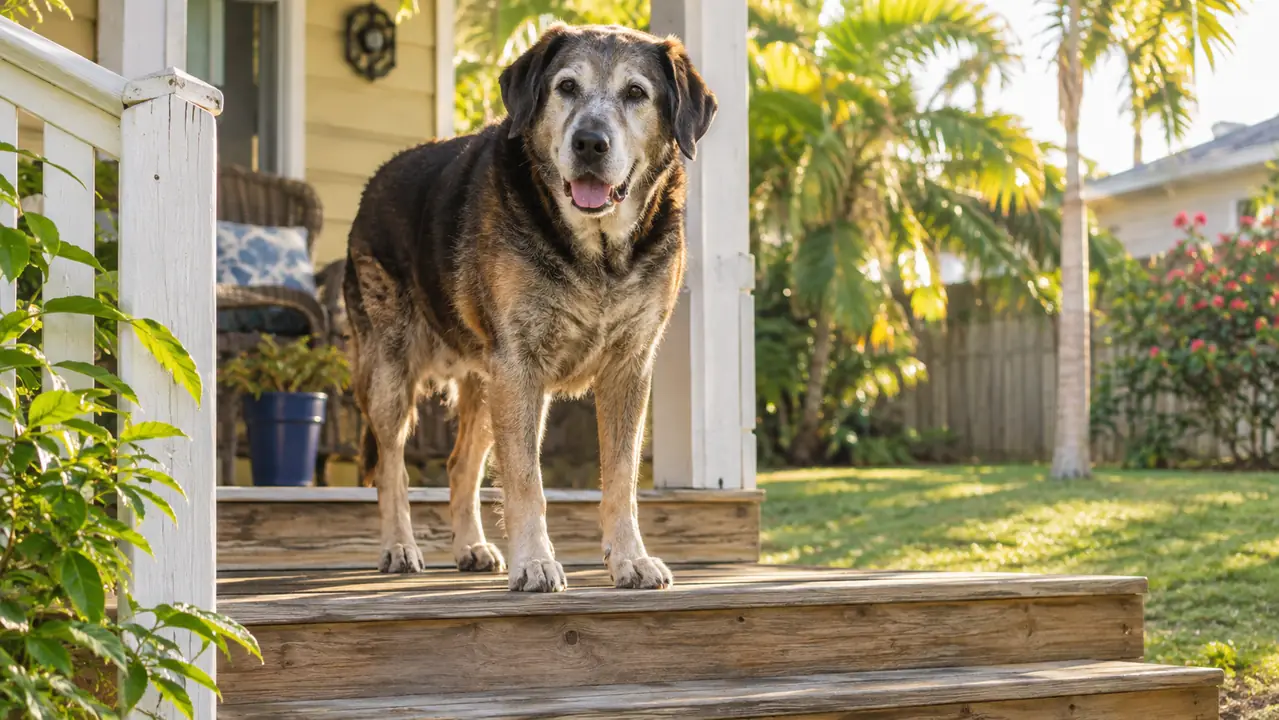
When Rudy turned 10, the car ride stopped being automatic. He would walk up to the open door, put his front paws on the seat, and then just stand there, rear end parked on the driveway, waiting. I would slide one hand under his belly and try to boost 78 pounds of Labrador without throwing out my own back in the process. That is the exact moment I started looking at lift harnesses, and it is why I bought the LOOBANI Dog Lift Harness for Large Dogs about six months ago. I have used it nearly every day since, for the three back-porch steps and for car rides on bad-hip mornings. This is the honest version of that review, the parts I wish someone had told me before I ordered it.
Let me be clear about one thing first. Rudy has been stiff in his back hips since he was about 8. Our vet has him on a daily joint chewable, and he gets a liquid fish oil on his dinner. Those are the things that made a real difference over weeks. The LOOBANI is not in that category. It is a tool for specific moments, the ones where his back end needs a little help and my back needs a little protection. If you are expecting a harness to fix a mobility problem, this review will save you some money. If you are looking for a way to make stairs and car rides easier, keep reading.
The Quick Verdict
A simple, well-made rear support sling that takes real weight off a senior dog's hips for stairs, car rides, and getting up from the floor. It will not fix the underlying problem, and it takes practice to position, but it does exactly what it promises.
Amazon Check Today's Price →The rear handle that saves my back on bad-hip mornings
For Rudy's porch steps and car rides, the LOOBANI lift harness is the tool I reach for. It is not a cure. It is a safe way to help a 78-pound dog without hurting myself.
Amazon Check Today's Price on Amazon →How I've Used It
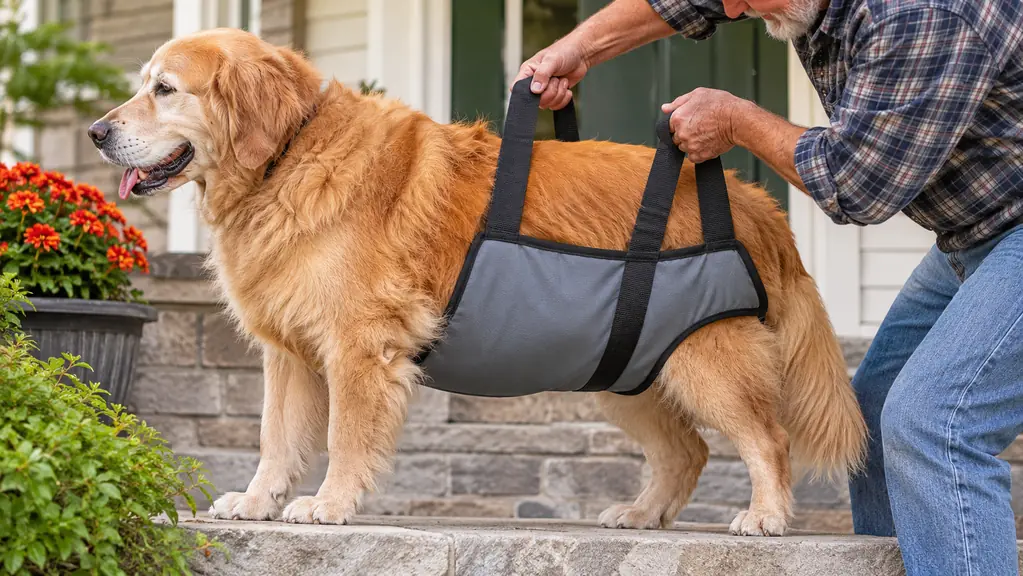
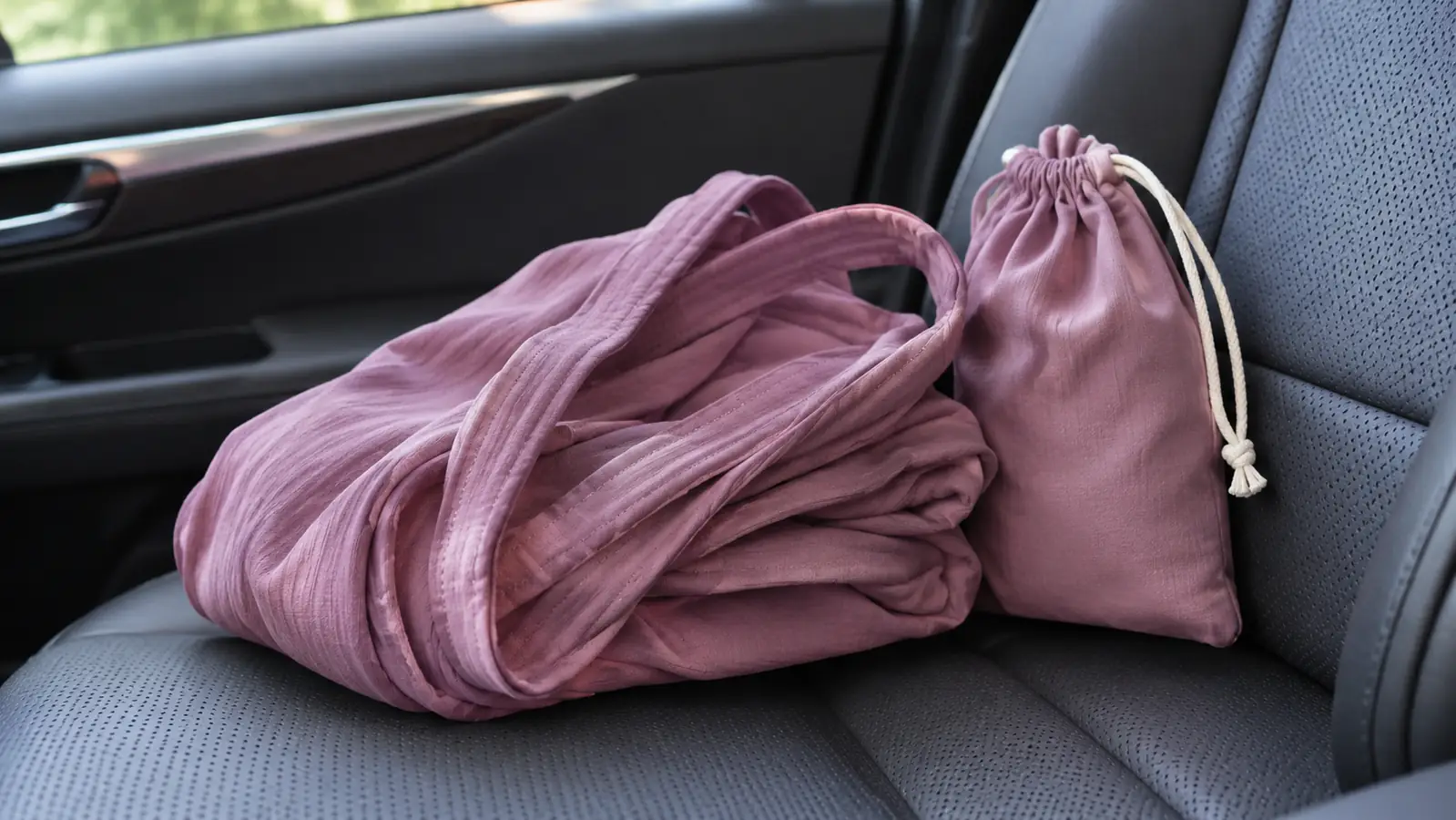
The LOOBANI is a sling, not a full harness. It is a wide band of nylon with handles, and it sits under the dog's belly or rear end while you lift gently with the handle. Rudy is 78 pounds and wears the X-Large. The sling itself weighs 14.88 ounces, which matters because you are the one carrying it around the house and the car. It came with a storage bag, and after six months that bag lives in the trunk of our car, because that is where I use the sling most.
My routine goes like this. On mornings when Rudy is slow to stand, I take the sling to the back door. I position it under his belly, adjust the drawstring so it sits snug but not tight, and use the rear handle to take some weight off his hips while he walks down the three porch steps. Same thing for the car. He puts his front paws on the seat, I lift gently with the rear handle, and he gets his back end up without me grabbing him under the ribs.
The first time I tried it at the car, back in early March, I made the mistake of waiting until Rudy was already standing at the open door before I reached for the sling. He shifted his weight, the sling slid forward, and I had to start over while he gave me the look he reserves for people who do not know what they are doing. Now I slide it under him before we leave the house, while he is standing still on the tile floor, and I tighten the drawstring so it stays put during the walk to the driveway. That one change made the whole routine work.
I want to be honest about the learning curve. The first two or three times, I fumbled. Rudy is not a patient dog when he is uncomfortable, and I was trying to figure out which handle to hold and how tight the drawstring should be. It took maybe a week before we both got the rhythm. Now it is routine, and he actually stands still when he sees me coming with it, because he knows it makes the steps easier.
What the LOOBANI Actually Is (and Is Not)
The product description calls it a support hip sling, and that is the most accurate way to describe it. It is not a wheelchair, not a full-body harness, and not something your dog wears all day. It is a nylon band with a soft lining and handles, designed for the moments when your dog needs help standing, going up or down stairs, getting into a car, or getting onto furniture.
The specs list a few things worth knowing. The material is nylon, which has held up well for six months of daily use, including some muddy mornings that ended with the sling going straight into the washing machine. It is machine washable, and that has been more important than I expected. The closure is a drawstring, which lets you adjust how snugly the sling fits around your dog's belly. The lining is described as sheepskin-like, and it is genuinely soft. Rudy does not flinch when I position it, which tells me it is not digging into him.
It also folds up small enough to fit in the included storage bag. That sounds like a minor detail, but it is the reason the sling lives in our car instead of in a drawer. If it did not fold up neatly, I would not carry it, and if I did not carry it, I would not use it. The portability is part of the product.
What Nobody Tells You Before You Buy
Here is the honest part, and it is the part I wish someone had spelled out for me. A lift harness does not do the lifting for you. It gives you a better grip and a safer angle, but you are still the one providing the force. For Rudy, that is fine, because I am not lifting his whole weight. I am taking maybe a third of it off his hips while his front legs and back legs do the rest. But if you are expecting the harness to do the work, you will be disappointed.
The second thing nobody tells you is that positioning takes practice, and your dog has to cooperate. The first time I tried to slide the sling under Rudy, he sat down. The second time, he walked away. It took a few attempts and a handful of treats before he understood what was happening. If your dog is anxious about being touched around the belly or rear, budget some time for that before you need the sling in a hurry.
The third thing is that the drawstring can work loose. I re-tighten it most weeks. It is a two-second fix, but it is a maintenance task the product photos do not mention. The storage bag is the same story. It is a simple drawstring bag and it does the job, but it is not fancy. None of these are deal-breakers. They are just the reality of using a simple tool every day.
There was one morning in April when I skipped the sling because we were only walking to the mailbox. Rudy got to the top of the porch steps, stopped, and looked back at me the way he does when he is deciding whether the steps are worth the trouble. I went back inside for the sling, and that was the day I stopped thinking of it as optional equipment. It takes me about thirty seconds to grab it from the car and another ten to slide it under him. Thirty seconds is a small price for saving both of us a bad moment.
Sizing and Fit, the Part I Almost Got Wrong
The LOOBANI comes in sizes, and Rudy wears the X-Large. He is a 78-pound Labrador, on the big side for a Lab, and the X-Large fits him with room to adjust. The drawstring is what makes the fit work. You slide the sling under the dog, pull the drawstring snug around the belly, and the sling stays in place while you lift. If it is too loose, it slides forward. If it is too tight, the dog will let you know.
When I measured Rudy before ordering, I wrapped a cloth tape around his belly just ahead of his back legs and wrote the number down. At 78 pounds with a deep chest, he is on the big side for a large dog, and the X-Large gives the drawstring enough room to pull snug without squeezing. The package arrived at about 9.88 by 4.17 by 4.09 inches and 14.96 ounces, which tells you how compact the folded sling is before you even open the bag. If he were any bigger, I would want to talk to our vet about a different kind of support.
My advice is to measure your dog before you order. The listing is for large dogs, and I chose the X-Large based on Rudy's weight. If your dog is between sizes, I would size up, because the drawstring gives you room to tighten, but you cannot add fabric that is not there. And give yourself a few practice runs at home before you need the sling in a real situation. A dog who has never felt a sling under his belly needs a minute to decide it is not a bath.
Six Months In, What Changed for Rudy
I keep a notebook of what changes when we try something new, because six weeks from now I will not remember. Here is what the notebook says about the LOOBANI. Rudy hesitates less at the top of the porch steps. Before the sling, he would stand at the top and look down for a while before committing. Now, when I have the rear handle ready, he goes. The car is the same story. He used to need two or three tries to get his back end up. Now it is usually one.
What did not change was his underlying stiffness. On cold mornings, he is still slow to stand. He still has days when he does not want to go for a walk. The sling did not make his hips better. It made the hard moments easier, and for a 78-pound dog with arthritis, that is what I needed. I also noticed that using the sling has been easier on me. I am 61, and I do not have the back I had at 40. Being able to help Rudy without bending into a bad position matters.
One moment stands out from late May. We had a string of rainy days, and Rudy got stiff in a way I had not seen since winter. The morning the rain finally stopped, he could not get his back end off the floor after his nap. I brought the sling in from the car, slid it under him, and lifted gently on the rear handle while he pushed with his front legs. He was up in one try, and he wagged his tail on the way to the back door like he was thanking me. That is the moment I stopped thinking of the sling as a convenience and started thinking of it as part of his care.
One more observation. The sling has held up. The nylon shows some wear from being dragged across concrete, but there are no tears, the stitching is intact, and the drawstring still works. After six months of near-daily use, including machine washes, I have no complaints about durability. I did notice the soft lining has flattened a little where it sits against Rudy's belly, but it has not thinned or worn through, and it still does its job.
The honest part: the LOOBANI did not make Rudy's hips better. It made the hard moments easier, and for a 78-pound dog that is what I needed.
What I Liked
- Takes real weight off a senior dog's rear end for stairs, car rides, and standing up
- Soft sheepskin-like lining, and Rudy stands still when I position it
- Nylon material is tough and machine washable after muddy mornings
- Drawstring closure lets me adjust the fit as needed
- Folds into the included storage bag, so it is easy to keep in the car
- Lightweight at 14.88 ounces
Where It Falls Short
- It is a helper, not a fix, and it does not improve the underlying stiffness
- Positioning takes practice, and the dog has to cooperate
- You still provide the lifting force, just from a better angle
- The drawstring works loose and needs re-tightening most weeks
- It is not for all-day wear, so it does not help with regular walks
The Alternatives I Considered Before Buying
Before I settled on the LOOBANI, I looked at rear support slings, which are basically the same idea with a different shape, and at full mobility harnesses with leg loops. The sling-style design won for one reason: simplicity. Rudy is 78 pounds, and I did not want to wrestle a complicated harness onto a dog who was already uncomfortable. The LOOBANI is one piece, it goes on in seconds, and there is nothing to buckle or adjust beyond the drawstring. I also considered a dog wheelchair, but our vet said Rudy was not there yet, and I am glad we did not go that route for a problem we did not have.
Who This Is For
Buy the LOOBANI if you have a senior or large dog who needs help with specific moments. Getting into the car. Going up and down stairs. Standing up after a nap. Getting onto the couch. Buy it if you are the person who does the lifting and your back is telling you to find a better way. Buy it if you want something simple, washable, and easy to store, without electronics or complicated straps. It is a tool for caregivers, and it does that job well.
Who Should Skip It
Skip it if you are hoping for a fix. If your dog's mobility is declining, the first conversation should be with your vet, not with an online order. Skip it if your dog needs more support than a sling can provide. A dog that cannot bear weight on its back legs needs a different kind of help, and you should talk to your vet about options. Skip it if your dog is small enough that you can lift them easily, or if your dog will not tolerate being touched around the belly. And if you are buying this for a dog who does not have a mobility problem yet, I would wait. It is a tool for a specific season of a dog's life, and that season will arrive soon enough.
The Bottom Line
Six months in, the LOOBANI Dog Lift Harness is part of our routine. It lives in the car, it comes out for the porch steps and the vet visits, and it has made those moments measurably easier for both of us. It is not a cure, and I would not pretend otherwise. It is a well-made, simple tool that does one thing. It gives you a safe way to help a dog whose back end needs a hand. If that is what you are looking for, I would buy it again. And if you are not sure, that is what the return window is for, but measure your dog first and give yourself a week to learn the rhythm before you judge it.
If your dog hesitates on the steps, this is worth trying
Six months in, the LOOBANI lift harness is part of our routine for car rides and the back porch. It is simple, washable, and it gives me a safe way to help Rudy without hurting my own back. Check today's price and see if it fits your dog's needs.
Amazon Check Today's Price on Amazon →