
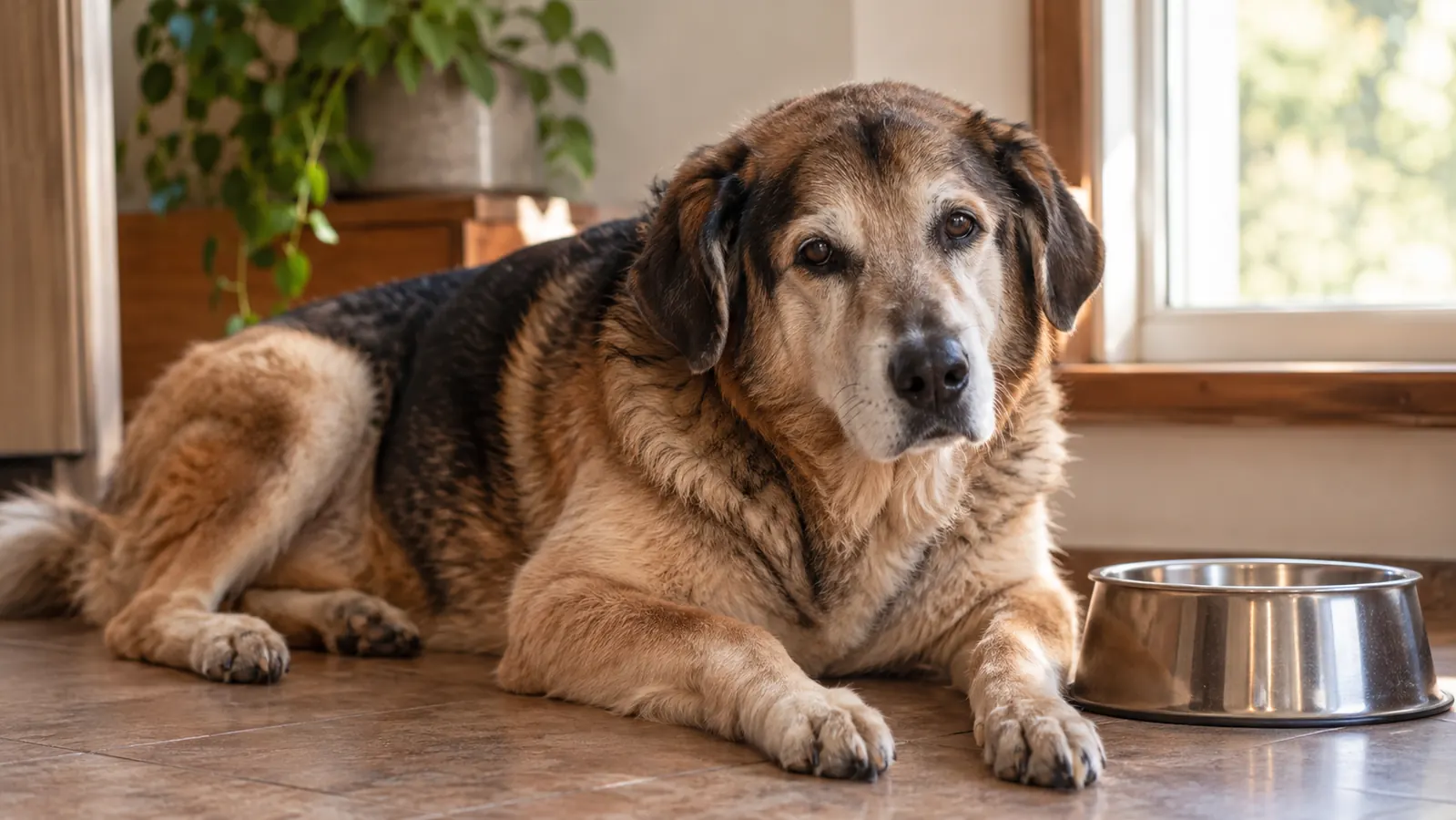
Rudy is 10 years old, 78 pounds, and a yellow Lab through and through. Around age 8 he started getting stiff in his back hips, slow to stand up after naps, and hesitant on the three steps off our back porch. Our vet suggested we try Cosequin from Nutramax Laboratories, and Rudy has been on it for about two years now. I keep a notebook of what I actually see, because I do not trust my memory when it comes to whether something is helping. This is what several more weeks of careful watching looked like, and what I think you should know before you buy.
If you are here because your older dog is suddenly moving like mine was, start with your vet. I am not a veterinarian, and nothing I write is a substitute for their opinion. What I can give you is a plain-spoken account of how one 10-year-old Lab responded to a daily chewable tablet from Nutramax Laboratories, what changed, what did not, and the questions I would ask before spending a cent.
The Quick Verdict
Cosequin is the daily baseline for Rudy's joints, and I would not skip a dose without asking our vet first. It did not fix his hips and it was never going to. What it did was make his get-ups easier after about six weeks, and that ease has held for two years. Buy it expecting a slow, steady support, not a transformation.
Amazon Check Today's Price →The chewable tablet our vet suggested first, and the one Rudy still takes every day
After two years of daily use, Cosequin from Nutramax Laboratories is still the first thing I reach for when I fill Rudy's morning bowl. It is not a quick fix, and I would not start it without a vet visit. But if your vet gives the go-ahead, this is the product I have watched work slowly and steadily.
Amazon Check Today's Price on Amazon →How I've Used It
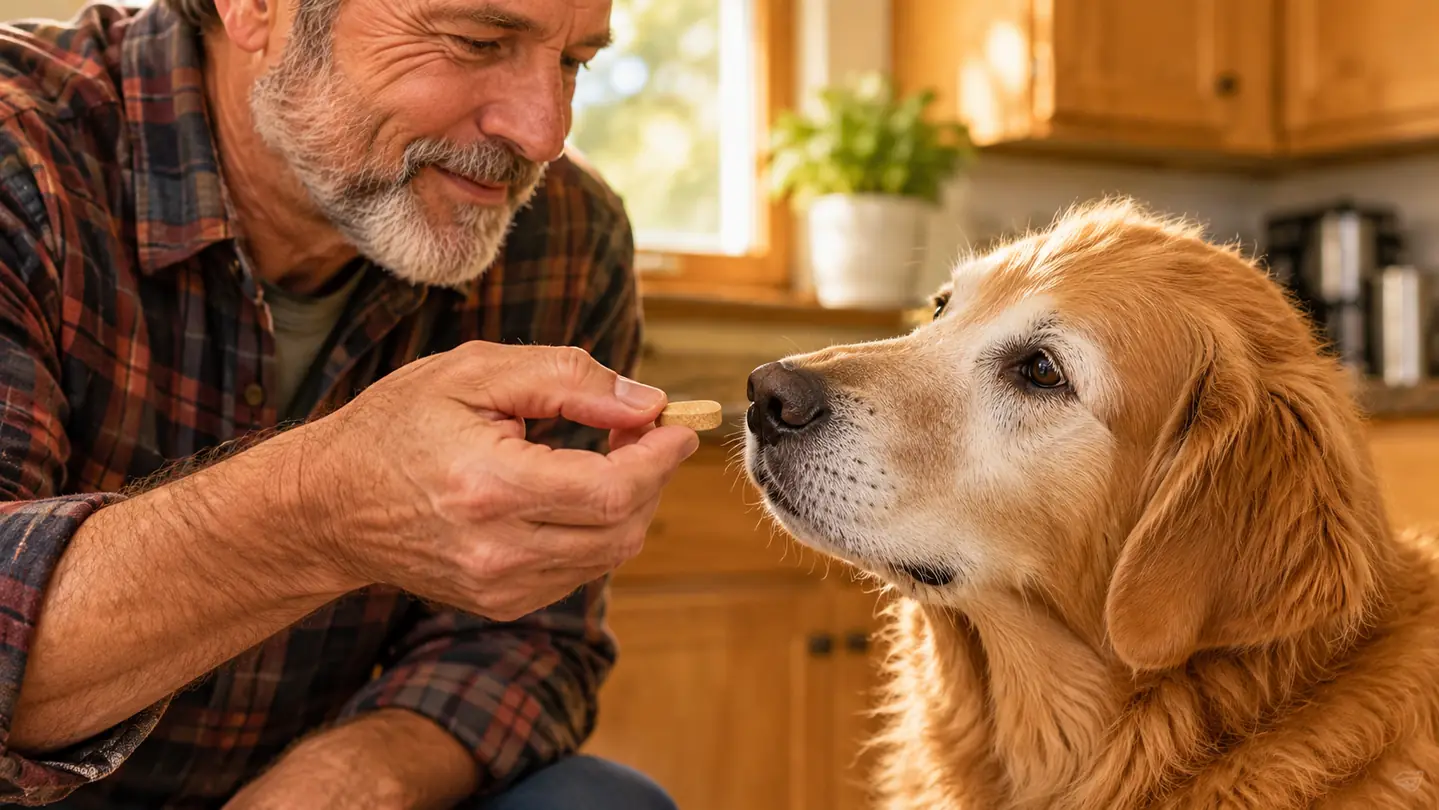
Rudy takes one Cosequin chewable tablet every morning, right after breakfast. At 78 pounds he is on the upper end of the medium range, and our vet set his dose at one tablet a day. I hide it in a small piece of plain chicken breast, because Rudy will eat almost anything if it smells like chicken. The tablet itself is small, about an inch across, and soft enough that he chews it rather than swallowing it whole.
The bottle we buy is the 132-count chewable tablet size, which lasts us about four and a half months at one tablet a day. The label lists the product dimensions as 1 x 1 x 1 inches per tablet, and the full bottle weighs about 12 ounces, so it is easy to toss into a zippered bag for a trip. I keep it in the pantry, out of the sun and away from the humidity, because I do not want the tablets to soften or lose their smell. When I open a fresh bottle, I write the date on the lid with a Sharpie, and I mark the calendar for the week we should run out. The product is a tablet, not a powder or a liquid, and it does not need to be refrigerated. I have never had a bottle go bad on us, and Rudy has never turned his nose up at one.
The active ingredients are glucosamine hydrochloride, methylsulfonylmethane (MSM), and sodium chondroitin sulfate. I am not going to pretend I can pronounce all of that on the first try. What I can tell you is that our vet explained it to me as building blocks for joint cartilage, and that the goal is support over time, not a one-day fix. I started Rudy on this at the vet's suggestion when he was 8, and I have kept him on it ever since. On mornings when his stomach seems a little off, I wait an extra half hour after breakfast before I give the tablet, and that has worked fine for us.
What I Noticed in the First Few Weeks
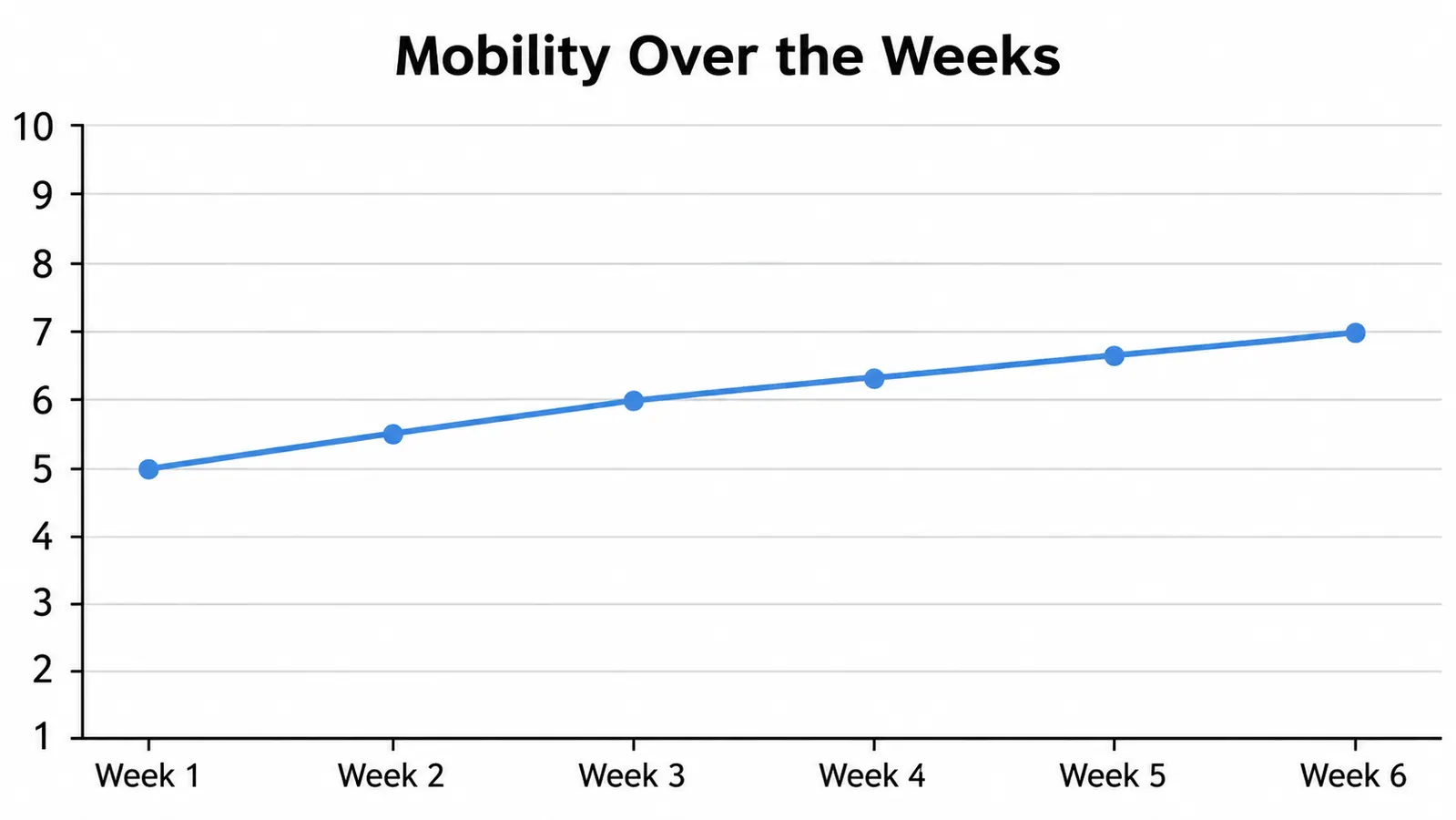
I need to be honest about the timeline, because the internet will try to sell you a before-and-after in 48 hours. That is not how it worked for us. For the first two weeks, I did not notice anything you could measure. Rudy was still slow to stand after his morning nap, and he still took a few careful steps before his hips loosened up. I wrote 'no change' in my notebook on day 10 and meant it.
Somewhere between week four and week six, the get-ups got easier. Not dramatically, not the way a puppy bounces up, but noticeably. Day 34 was the first morning Rudy stood up from his bed without the little hip rock, and I remember it because I almost dropped my coffee. He also started taking the three back-porch steps with less hesitation, though I still stood behind him with a hand on his collar on bad days. By day 40 I had stopped hovering quite so close, but I kept my hand near his collar until he was all the way down. The change was gradual enough that I almost missed it, which is exactly why I keep the notebook.
I want to be clear about what I did not see. Cosequin did not cure Rudy's stiffness, and it did not turn him back into a 3-year-old. On cold mornings, he is still slow. On a 45-degree morning in January, he took the three back-porch steps one at a time, and he still braced himself at the top for a second before he moved. After a long day at the beach, he still limps a little on his right side. What changed is the everyday pattern: the daily stiffness that used to make me wince when I watched him stand up is softer now. That is the difference between a supplement that supports a joint and a medicine that treats a disease, and I think the distinction matters.
The change was gradual enough that I almost missed it. Somewhere between week four and week six, Rudy's get-ups got easier, and that ease has held for two years.
The Ingredients, in Plain English
The three active ingredients in Cosequin are glucosamine hydrochloride, sodium chondroitin sulfate, and MSM. The label lists the glucosamine as glucosamine hydrochloride, abbreviated FCHG49, and the chondroitin as sodium chondroitin sulfate, abbreviated TRH122. Our vet described those two as the building blocks your dog's body uses to maintain joint cartilage, and MSM as a source of sulfur that some research suggests may help with comfort. I am not going to oversell the science, because I am not a researcher. What I can tell you is that the brand has been around a long time, and that our vet recommended it by name, which matters more to me than any ad.
Nutramax Laboratories says Cosequin is the number one veterinarian recommended retail joint health supplement brand, and that the company has been a leader in pet health for over 25 years. I cannot verify those claims myself, but I can tell you that when I asked our vet what to start with, Cosequin was the first name out of her mouth. That is the kind of recommendation I trust, because she does not sell supplements and she does not get a commission. A company that has been making pet supplements for over 25 years has a reputation to protect, and that counts for something with me.
The label also lists the product as free of almonds, which was a relief because Rudy has a sensitive stomach and I have learned to read every label twice. The tablet form works well for us because it is easy to dose, easy to hide in food, and easy to travel with. We have taken the bottle to my sister's house for a week and to the beach for a long weekend, and it has held up fine in a zippered bag.
The Routine That Actually Helped Rudy
I do not want to give the impression that a single chewable tablet did all the work, because that would not be true. Cosequin from Nutramax Laboratories is the daily baseline, but it works alongside a few other things our vet approved. About a year ago we added a liquid fish oil from Nordic Naturals, pumped onto Rudy's dinner for his joints and his dry coat. About eight months ago we added a soft chew from Zesty Paws for green-lipped mussel, after I read about it and cleared it with our vet. And about ten months ago I bought Rudy an XL orthopedic memory foam bed from EHEYCIGA, because a 78-pound Lab will flatten a cheap bed in a season.
The bed matters more than I expected. Rudy used to sleep on a flat cushion that had gone as flat as a pancake, and he would wake up stiff and slow. On the orthopedic bed, he still takes a minute to stand, but it is a shorter minute. I put the bed with one edge against the wall, because he uses the wall to brace himself when he stands. Our house is a single story with tile floors, which are beautiful and miserable for an older dog, so I have laid two long runners in the hallway and a big rug in the living room to give him dry footing on the way to his water bowl. I also use a lift harness from LOOBANI on his bad days, especially for the porch steps and for getting into the car. The rear handle lets me take some weight off his hips without pulling on his neck. It is not a daily thing; it is a helper for specific moments, and it hangs on a hook by the back door.
I tell you all of this because I want you to have a realistic picture. If you add Cosequin to a routine that includes slippery floors, a flattened bed, and no vet check-in, you may be disappointed. If you fix the slippery floors, upgrade the bed, keep the weight off, and add a supplement your vet approves, you give the supplement a fair chance to do its part. That is the honest version of what worked for us.
Pros and Cons
What I Liked
- Our vet recommended it by name, and it is the number one vet recommended retail joint health supplement brand, according to Nutramax Laboratories
- Chewable tablet form is easy to dose and easy to hide in food; Rudy takes it like a treat
- One tablet a day lasted us about four and a half months from the 132-count bottle
- Noticeable, gradual improvement in Rudy's get-ups after roughly six weeks, and the effect has held for two years
- No almonds, and no stomach upset for a dog with a sensitive stomach
Where It Falls Short
- It is not a quick fix; we saw no measurable change in the first two weeks
- It does not cure arthritis or reverse joint damage, and cold mornings still slow Rudy down
- You need to stay consistent; missing doses for a week seemed to set us back
- It is a daily cost you have to budget for, and the price varies by size and seller
Who This Is For
Cosequin is for the owner of a middle-aged or senior dog who is starting to slow down, and who has already had the conversation with their vet. It is for the person who understands that a joint supplement is a long game, not a sprint, and who can commit to giving a tablet every single day for months. It is for the person who, like me, would rather try a vet-approved daily support than watch their dog struggle to stand and do nothing.
It is also for the person who wants a product that is easy to give. If your dog is picky, the chewable form is a real advantage, because you can hide it in a small piece of meat or cheese. If you travel, the bottle is compact enough to toss in a bag. And if you are the kind of person who likes knowing exactly what is in the bottle, the label lists the active ingredients plainly. That clarity matters when you are making a daily decision for a dog you love.
Who Should Skip It
Skip Cosequin if you are looking for a cure, because it is not one. If your dog is already limping badly, refusing to put weight on a leg, or crying out when they stand, do not order a supplement first. Go to the vet. Pain like that can be a torn ligament, arthritis that needs prescription medicine, or something else entirely, and a supplement is not the right first step.
Skip it if you are not ready to be consistent. A supplement you give twice a week is not the same as a supplement you give every day, and I noticed a difference when we missed a few doses during a busy stretch. And if your dog has a known health condition, or is on other medications, do not add Cosequin without talking to your vet first. I say that for every supplement, including the ones I use myself.
If your vet gives the go-ahead, this is the daily support that has worked for Rudy for two years
I started Rudy on Cosequin from Nutramax Laboratories at our vet's suggestion, and I have watched it make his mornings easier over time. It is not dramatic, and it is not a cure. It is steady, daily support that has earned its place in our routine. Check today's price on Amazon, and bring the label to your next vet visit.
Amazon Check Today's Price on Amazon →