
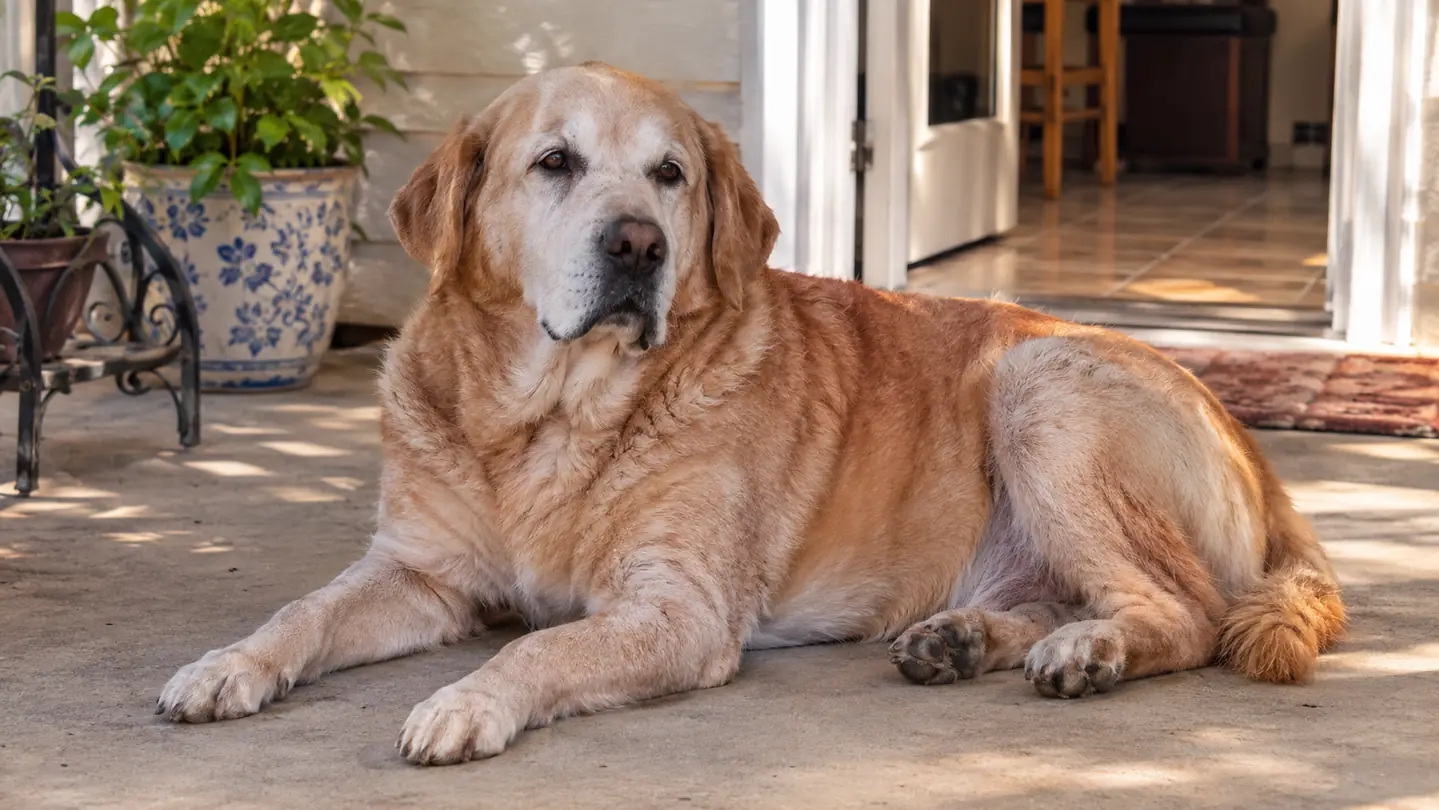
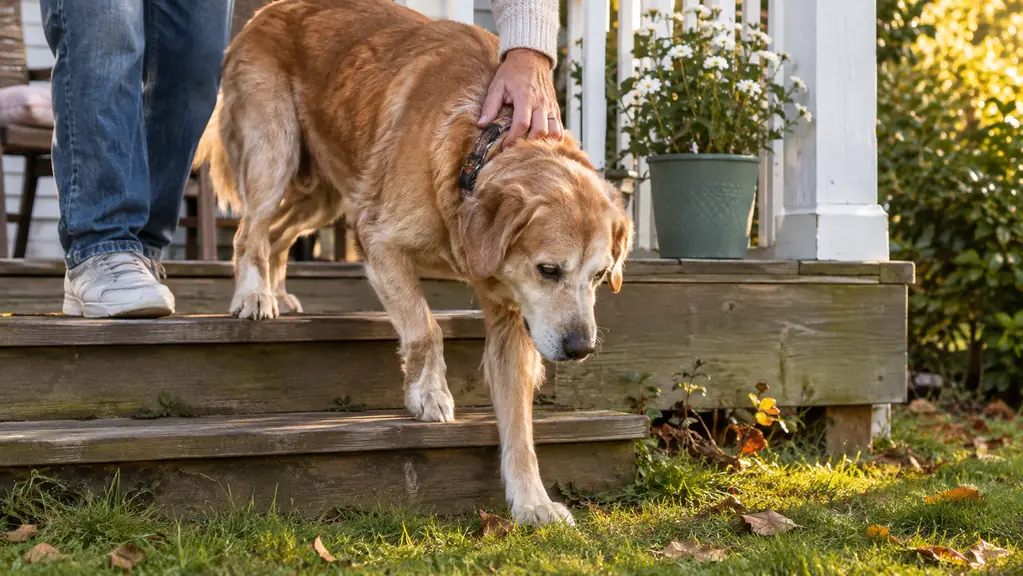
When a dog starts to slow down, you notice it in the small moments, not in some big dramatic event. Rudy, our 10-year-old yellow Lab, used to pop up from a nap like someone had pulled a string. Around age 8, that changed. He would lie there a beat longer, then rock forward onto his front legs before his back hips got the message. On the three back-porch steps, he started to hesitate, one paw hovering before he committed. Our vet said the stiffness in his back hips was something we could manage, not cure, and one of the first things she suggested was a daily omega-3 fish oil. After about a year of giving Rudy Nordic Naturals Omega-3 Pet with his dinner, I can tell you exactly how we do it, what I watched for, and what I would ask your vet before you buy a bottle.
I am not going to tell you that fish oil cures arthritis, because it does not, and I would side-eye any product that claims it does. What I can tell you is what our vet said and what I actually watched happen over the course of a year. She suggested the omega-3s for Rudy's joints and for the dry coat he had developed, and she was clear that this kind of thing works slowly. The label on the bottle lists coat, eyes, and heart as the uses. Joints are not on the label. But the vet's reasoning made sense to me, and the changes I saw were real, if gradual. This article is the step-by-step version of that year, so you can do it a little more carefully than I did at first.
The fish oil we have put on Rudy's dinner for about a year
Nordic Naturals Omega-3 Pet is the liquid fish oil our vet suggested and the one we have used ever since. It is unflavored, made for dogs and cats, and the 2-ounce bottle fits easily into our evening routine. If you would like to check today's price, the button is right below.
Amazon Check Today's Price on Amazon →Step 1: Ask Your Vet Before You Add Anything
This is the step people want to skip, and it is the one I would insist on. Rudy is 78 pounds, 10 years old, and already on a daily Cosequin chewable our vet recommended when he was 8. Before we added fish oil, we ran it past her. She knew his history, his weight, and the other supplement he was taking, and she is the one who suggested the oil in the first place. Your dog's situation is different. A fish oil can matter more or less depending on what else is going on, and if your dog takes other medication, that is exactly the kind of thing a vet should weigh in on. I know it feels like an extra errand, but it is a ten-minute phone call.
The other reason to ask first is so you have a baseline. Our vet told us what to watch for: easier get-ups, less hesitation on the porch steps, a coat that did not look so dull. Without a baseline, you will be guessing about whether anything is working. Write down what you notice before you start, even if it is just 'he takes a beat before standing up after a nap.' That note becomes your measuring stick, and you will be glad you have it six weeks from now, when you are trying to remember whether anything has actually changed.
And if your dog has ever had a reaction to fish, say so when you ask. This is fish oil. That is the whole allergen story, and it is better to have that conversation before the bottle arrives than after. Our vet asked about allergies as a matter of course, and that is the standard you want.
Step 2: Pick a Fish Oil Made for Pets
There are plenty of human fish oils on the shelf, and I understand the temptation to save a few dollars. But a pet-specific oil is made for dogs and cats, not people, and that distinction matters more than you would think. The Nordic Naturals Omega-3 Pet we use is made for pets, with 294mg of fish oil that includes EPA and DHA. The amount you give is something your vet confirms, and the 2-ounce size keeps things simple. The little bottle is about 4 inches tall, which tells you right away that a little goes a long way.
What I liked when I read the label: it is unflavored, so there is no fake fish taste sprayed on to hide anything. It is in the triglyceride molecular form, which is the form naturally found in fish. And the company is upfront that it uses non-GMO, gluten-free, and dairy-free ingredients, with no artificial colors, flavors, or preservatives. For a dog who eats the same dinner every night, that is the kind of boring, predictable quality I want in something I give him daily. I do not need fancy; I need consistent.
The form matters too. This is a liquid, not a chewable, which is exactly why it works for us: it disappears into dinner. Rudy does not have to be talked into a pill, and I do not have to hide anything in a pocket of peanut butter. If your dog is on a special diet or has food sensitivities, the gluten-free and dairy-free part is worth mentioning to your vet when you ask about it. And it is labeled for dogs and cats, so if you have both, one bottle can cover two dinner bowls.
Step 3: Start with the Right Amount, Then Give It Time
I am not going to give you a dose in this article, because the right amount depends on your dog's weight and your vet should confirm it. What I will tell you is how we handled it with Rudy. We gave him the amount our vet confirmed, and I wrote it on the bottle with a marker so Dale and I did not second-guess ourselves. Fish oil is a give-it-time supplement, not a more-is-better one, and the bottle is small for a reason. You are not trying to drown his dinner; you are trying to be consistent.
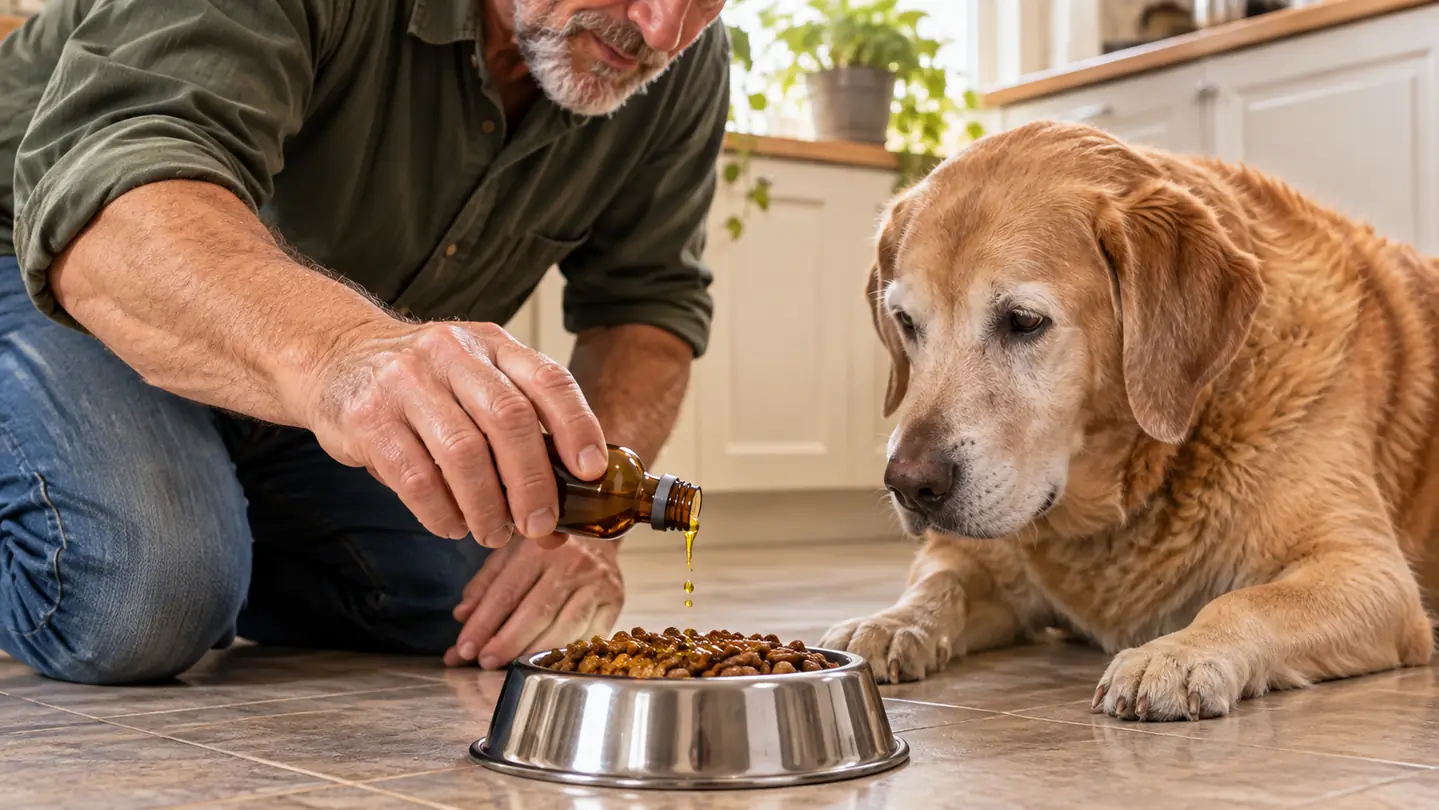
The practical part: the oil goes onto his dinner, not into a pill pocket. I scoop his food, add the oil, give it a quick stir with a fork, and set the bowl down. Rudy never once turned up his nose at it, which I credit to the unflavored formula and to the fact that he is a Labrador who would eat a shoe if I seasoned it. For a pickier dog, start with a smaller amount mixed into something strong-smelling, like a little canned food, and work up from there. The goal is a normal dinner, not a production.
Keep the bottle somewhere sensible. Ours lives in the kitchen, away from the heat of the stove, and I treat it the way I treat my own vitamins: it is a food, and food does not belong in direct sunlight or next to the oven. A 2-ounce bottle does not sit around long enough to go bad in our house, but I still check the date on it. Rancid oil helps nobody, and an older dog with stiff joints does not need a stomachache on top of everything else.
Step 4: Make It Part of Dinner, Not a Battle
The single best piece of advice I have is to attach the oil to something that already happens every day. For us, that is dinner. Rudy gets his evening meal at the same time, in the same stainless bowl, and the oil is just part of that routine now. After about a year, I do not even think about it. I scoop, I add, I stir, I set the bowl down. It takes about twenty seconds, and it happens before I have even finished making our own dinner.
If your dog is a suspicious eater, do not make it a fight. Start with less oil and more of whatever they love, and let them get used to the smell. You can also try it on a small spoonful of plain yogurt if your vet says yogurt is fine for your dog. The goal is to make the oil a normal part of the meal, not a daily wrestling match. A dog who associates the bottle with dinner will actually wait for it, which is what Rudy does now. He hears the little bottle come out of the cabinet and he is suddenly very interested in his bowl.
One thing I would warn against: do not pour the oil over a full bowl and walk away if your dog is the type to inhale food. Give it a proper stir so the oil is not sitting in one spot. It spreads better, and you will not have one mouthful that tastes stronger than the rest. That is the kind of small detail that keeps a finicky eater from deciding the whole bowl is suspect. It takes five extra seconds, and it saves you from a dog who suddenly refuses dinner.
Step 5: Give It Six Weeks, and Write Down What You See
Here is the part nobody likes: this is not a fast product. Our vet told us to expect changes over weeks, not days, and she was right. I keep a notebook, and the entries from the first couple of weeks are mostly 'no change yet, still slow to get up.' That is normal. I would have been suspicious if Rudy had bounced up like a puppy overnight, because that is not how joints work and it is not how supplements work either. Anything that promises a spring in the step by Saturday is selling you something.
What I actually saw, around the four-to-six-week mark: Rudy's get-ups after a nap looked less like a production. He still had stiff days, especially in the morning or after a long lie-down, and he still used the back-porch steps carefully. But the little pause before his back hips caught up got shorter. His coat also felt less dry, which was the other thing the vet said to watch. I wrote all of it down, including the days nothing changed, because that is the only honest way to judge something like this. The notebook does not lie, even when I wish it would.
If you do not see any change after six to eight weeks, that is information, not failure. Talk to your vet. Maybe the amount needs adjusting, maybe your dog needs a different approach, maybe the stiffness is from something else entirely. The point of a careful trial is to learn something, and you have learned something either way. What you should not do is keep giving more and more hoping for a different result. More is not a plan, and a dog's stomach is not a place for guesswork.
What Else Helps
Fish oil was never the whole plan for Rudy, and I would be doing you a disservice to pretend it was. He has been on a daily Cosequin chewable our vet recommended since he was 8, and that is the baseline. The oil went on top of that, not instead of it. We also bought him an orthopedic bed around ten months ago, because a 78-pound dog needs somewhere soft to rest his hips, and we use a lift harness for the porch steps and the car on his bad days. Every piece does a different job, and together they make his days more comfortable. No single bottle carries the whole load.
The other thing that helped was small changes around the house. The tile floors are slick for an older dog, so we are mindful of where he stands up. We slowed our walks down and let him set the pace. And we kept his weight where the vet wanted it, because every extra pound is extra work for stiff hips. Fish oil fits into that bigger picture. It is not the whole picture, and I think that is worth remembering before you buy any single bottle of anything, including this one.
If you are just starting out, the order I would suggest is this: vet first, then the daily chewable if they recommend one, then the fish oil, then the comfort items like the bed and the harness as you figure out what your dog actually needs. You do not have to buy everything at once. Rudy's routine built up over two years, one piece at a time, and each piece earned its place by doing something I could see.
Around the four-to-six-week mark, Rudy's get-ups after a nap looked less like a production. Not cured, not spring-loaded, just easier. That is what I wrote in my notebook, and that is all I will claim.
Give it a fair trial, with your vet's blessing
If your vet gives the okay, a good fish oil is an easy thing to add to an older dog's dinner. Nordic Naturals Omega-3 Pet is the one we have used for about a year, and the routine takes seconds once it becomes habit. Check today's price on Amazon whenever you are ready.
Amazon Check Today's Price on Amazon →