
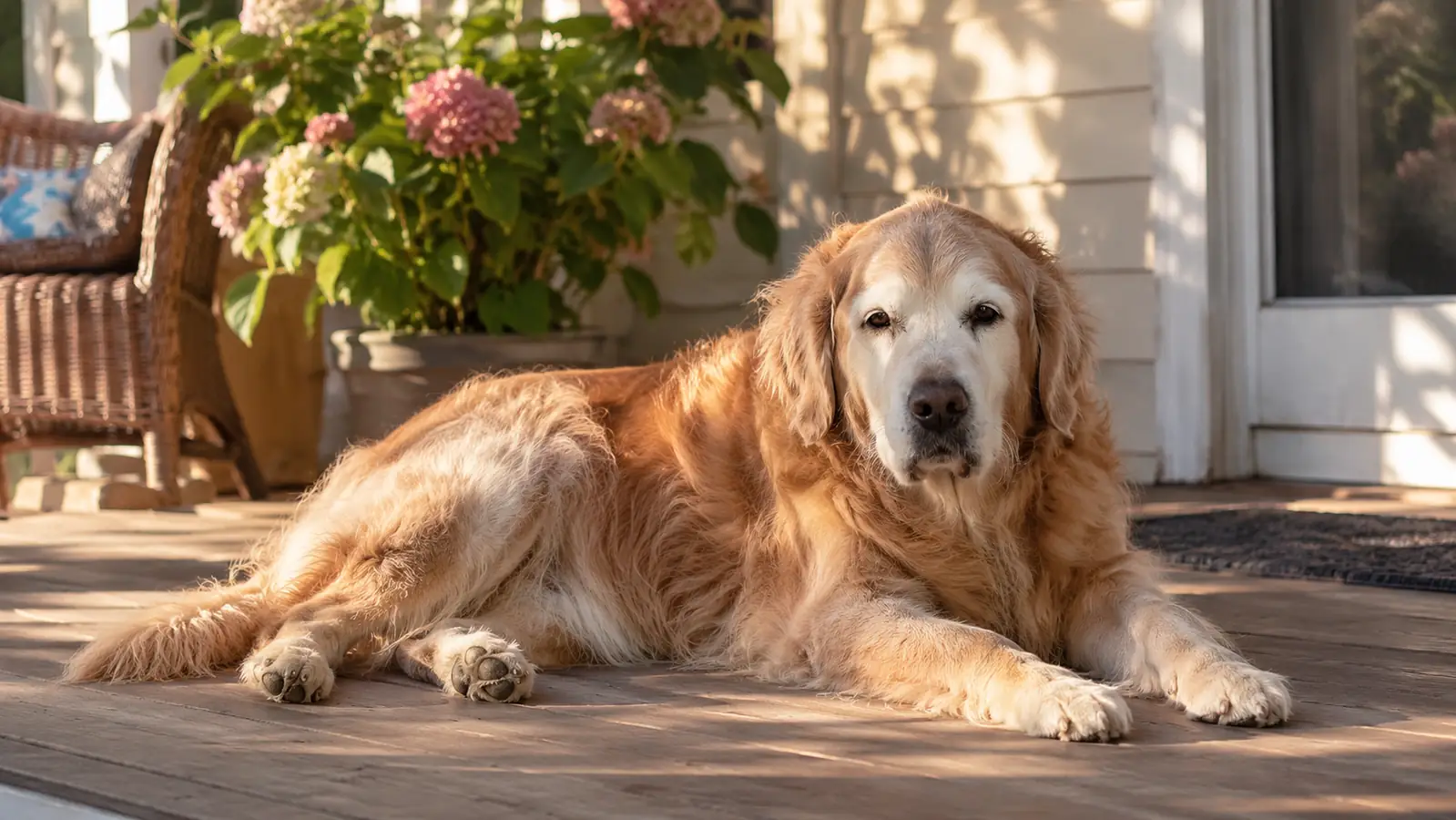
When our vet first suggested a joint supplement for Rudy, I assumed there was one obvious choice and I just needed to find it. The moment that started it was a Tuesday morning in late September, two years ago. Rudy was 8, a 78-pound yellow Lab, and he had just stood at the bottom of our three back-porch steps, looking up at me like he was doing the math before he committed to the climb. He made it up fine, but I saw the hesitation, and I wrote it down in my notebook. That weekend I called the vet, and she said what she always says: bring him in, let me look at him, and we will talk about what helps. She checked his hips, watched him walk across the exam room floor, and asked how he was on the tile in our house. I told her he was careful on the tile, slower than he used to be, and that the three steps down to the yard had become his least favorite part of the day. Then she said the two names I had never heard together before: Cosequin and Dasuquin, both made by Nutramax Laboratories, both recommended for older dogs, both with loyal followings. I stood in the aisle at the pet supply store trying to decide between them, reading labels and getting nowhere, and the truth is the decision is simpler than the marketing makes it look. Here is what I learned, what I asked the vet, and which one I would pick again.
The short answer: Cosequin from Nutramax Laboratories was the right starting place for Rudy, and it is still the daily baseline for his joints two years later. Dasuquin is a reasonable step up if a dog needs more support, but it costs more and you should ask your vet before you pay the difference. Let me walk you through the comparison the way I wish someone had for me, including the question I forgot to ask at first: how long is a fair trial? Our vet said to give Cosequin a full six to eight weeks before judging it, and to keep a record of the small things, not the big ones. Not 'is he running again' but 'did he get up on the first try this morning' and 'did he take the steps without pausing.' She said most owners quit after ten days because they expect a young dog and see nothing, and then they tell everyone the supplement does not work. That advice shaped how I think about both of these products, so I am passing it along before we get into the details. The question is not which one is better in a laboratory; it is which one is right for your dog, your budget, and your routine.
| Cosequin (Nutramax Laboratories) | Dasuquin | |
|---|---|---|
| Active ingredients | Glucosamine hydrochloride, sodium chondroitin sulfate, and MSM | The same glucosamine and chondroitin, plus avocado soybean unsaponifiables (ASU) |
| Extra joint support | MSM for everyday stiffness and mobility | ASU, an added ingredient some dogs seem to benefit from for firmer support |
| Ease of giving | Chewable tablet Rudy takes as a treat, no fighting | Also a chewable tablet, same general approach |
| Typical starting point | Usually what the vet suggests first | Often reserved for dogs that need more than the basics |
| Cost | Lower day-to-day cost for long-term daily use | Higher cost for the added ingredient |
| Best for | A senior dog just starting on joint support | A dog whose stiffness is not improving enough on a basic formula |
Where Cosequin Wins
Cosequin wins on being the sensible first conversation with your vet. When Rudy started slowing down around age 8, slow to stand after naps and hesitant on our three back-porch steps, the vet did not reach for the fanciest option on the shelf. She recommended Cosequin from Nutramax Laboratories and gave us specific instructions: his daily chewable tablet with dinner, and a real trial of six to eight weeks before we judged anything. She also told us what to watch for, and it was not what I expected. She said most owners look for the dog to run again, and that is the wrong measure for an 8-year-old Lab. The right measures are small: does he get up on the first try, does he take the steps without pausing at the bottom, does he seem comfortable when he settles down at night. I wrote those three questions in my notebook and started checking them every day. I also put a rug beside his bed, because the tile floors in our single-story house gave him nothing to grip when he pushed himself up in the morning.
The first two weeks, nothing changed. I will be honest, I started to wonder if we were wasting money on a supplement that was mostly hope. Rudy still hesitated at the bottom of the steps, still took two tries to get up from his bed some mornings. I kept giving the tablet anyway because the vet had said six to eight weeks, and I respect that woman. Somewhere around the sixth week, on a cool morning in early November, I realized I had watched Rudy get up from his bed on the first try three mornings in a row. It was not dramatic. He did not bound across the yard. But the hesitation was shorter, and the steps were easier. I wrote 'first try, three days in a row' in the notebook and underlined it. That was the day I stopped wondering whether we were wasting money. The change showed up in the notebook before it showed up in my confidence.
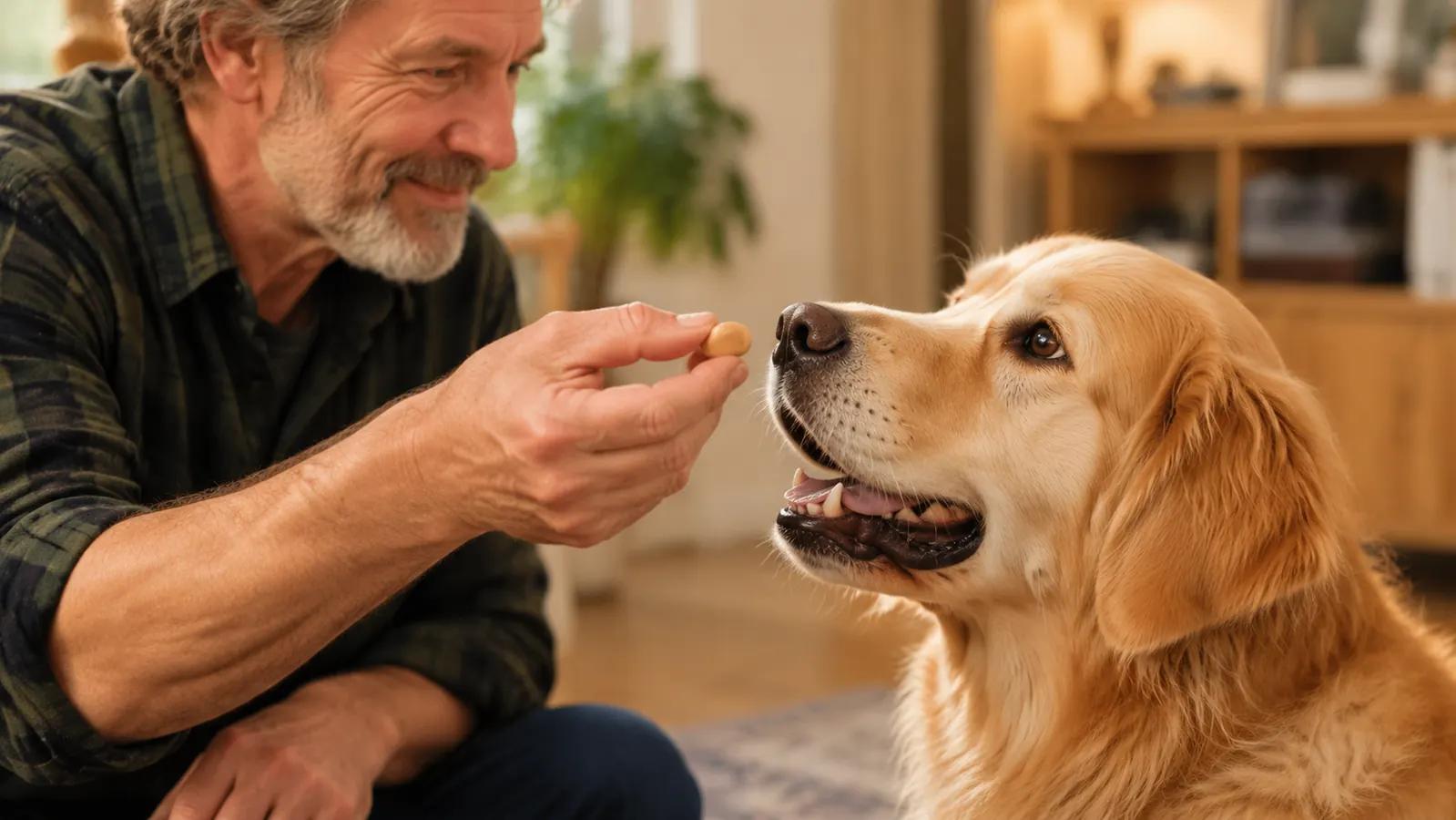
The label tells you why it might work. Cosequin is built around glucosamine hydrochloride and sodium chondroitin sulfate, the two ingredients most joint supplements for dogs are judged by, plus methylsulfonylmethane, usually written as MSM, which is included for everyday stiffness and mobility. Nutramax Laboratories lists the specific forms on the label, FCHG49 for the glucosamine and TRH122 for the chondroitin, which tells me they are not shy about what is inside. That matters to me because I am paying for a daily habit, not a one-time purchase. The chewable tablets are easy to give, Rudy takes his like a treat, and the daily cost is low enough that it has been part of our routine for two years without me ever resenting the bill. He hears the bottle and comes trotting in from the yard, same as he does for any treat. For most families with a senior dog that is just starting to slow down, that is exactly what you want: a well-studied supplement from a company that has been making pet health products for over 25 years.
Where Dasuquin Wins
I will be honest: Dasuquin has one ingredient Cosequin does not, and for some dogs it seems to matter. The added avocado soybean unsaponifiables, usually shortened to ASU, is the reason Dasuquin costs more. Some research and a lot of vet experience suggest ASU can provide additional support for dogs with more noticeable joint discomfort. When I asked our vet about it, she did not dismiss it. She said she has patients who do fine on a basic glucosamine and chondroitin formula and patients who seem to need the extra support, and she has seen enough dogs improve on Dasuquin that she recommends it without hesitation when the basic formula is not doing the job. Coming from a vet who is not quick to add supplements, that endorsement carried weight with me.
That said, I want to be careful here. ASU is not a magic ingredient, and I have never seen a vet promise it will turn things around. It is a step up in support and a step up in price, and it should be a decision you make with your vet, not one you make in the aisle. The way I think about it is this: if Cosequin is the sensible first step, Dasuquin is the considered second step, the one you take when you have given the first step a fair trial and the answer is not good enough. I asked our vet directly whether we should switch Rudy to Dasuquin, and she said not yet. She pointed at my notebook and said the Cosequin was doing its job, and there was no reason to spend more money chasing a problem we did not have. I appreciated that. A vet who talks you out of spending money is a vet worth listening to. She also said that if we ever did make the switch, we would give Dasuquin the same trial period of six to eight weeks and judge it by the same three questions in the notebook.
For Rudy, Cosequin was enough, so we never needed to make that step. His stiffness never went away, but it stayed manageable, and the vet was happy with where he was at his annual checkup last spring. He still has mornings where he gets up slower than I would like, and he still pauses at the bottom of the porch steps when the weather is cold and damp. But the daily baseline has held for two years, and that is more than I expected from any supplement. If your dog needs more than the basics, Dasuquin is the more capable formula, and I would not talk anyone out of asking their vet about it.
For us, Cosequin was enough. Rudy got up more easily after about six weeks, and two years later it is still the daily baseline for his joints.
Start with the supplement most vets suggest first
Cosequin is the #1 vet recommended retail joint health supplement brand, and it is the one our vet suggested for Rudy. If your dog is just starting to slow down, this is the sensible place to begin.
Amazon Check Today's Price on Amazon →
Who Should Buy Which
Buy Cosequin if your dog is just starting to slow down, if you want the supplement most vets suggest first, or if you need a daily routine you can actually afford to keep for years. That was our situation exactly. Rudy was 8, his stiffness was real but manageable, and we needed something we could give every single day without thinking about it. Two years later, the routine is so automatic that I do not even have to call him; he hears the bottle and comes trotting in from the yard, same as he does for any treat. Not bad for a 10-year-old Lab. If your dog is in that same place, just starting to slow down, Cosequin is the right first conversation to have with your vet. Start there, give it six to eight weeks, and keep a notebook. And talk to your vet before you start, because your dog's situation may be different from Rudy's.
Ask your vet about Dasuquin if your dog has been on a basic joint supplement for six to eight weeks and the stiffness is not improving, or if your vet specifically recommends the added ASU. It is a fine product from the same company, and it may be the better fit for a dog that needs more support. Just do not pay the difference before you have a conversation about whether your dog actually needs it. And whatever you choose, give it a real trial. Six weeks, minimum, with a notebook, checking the small things: first-try get-ups, the pause at the bottom of the steps, how easily he settles at night. That is the only way to know if a supplement is doing anything, and it is the advice I wish someone had given me before I stood in that aisle comparing labels. The right supplement is the one your dog will still be taking a year from now, and the one your vet is comfortable with. For us, that was Cosequin from Nutramax Laboratories.
The sensible first step for a stiff senior dog
Cosequin from Nutramax Laboratories is the daily baseline that has worked for Rudy for two years. Talk to your vet, then start there.
Amazon Check Today's Price on Amazon →